
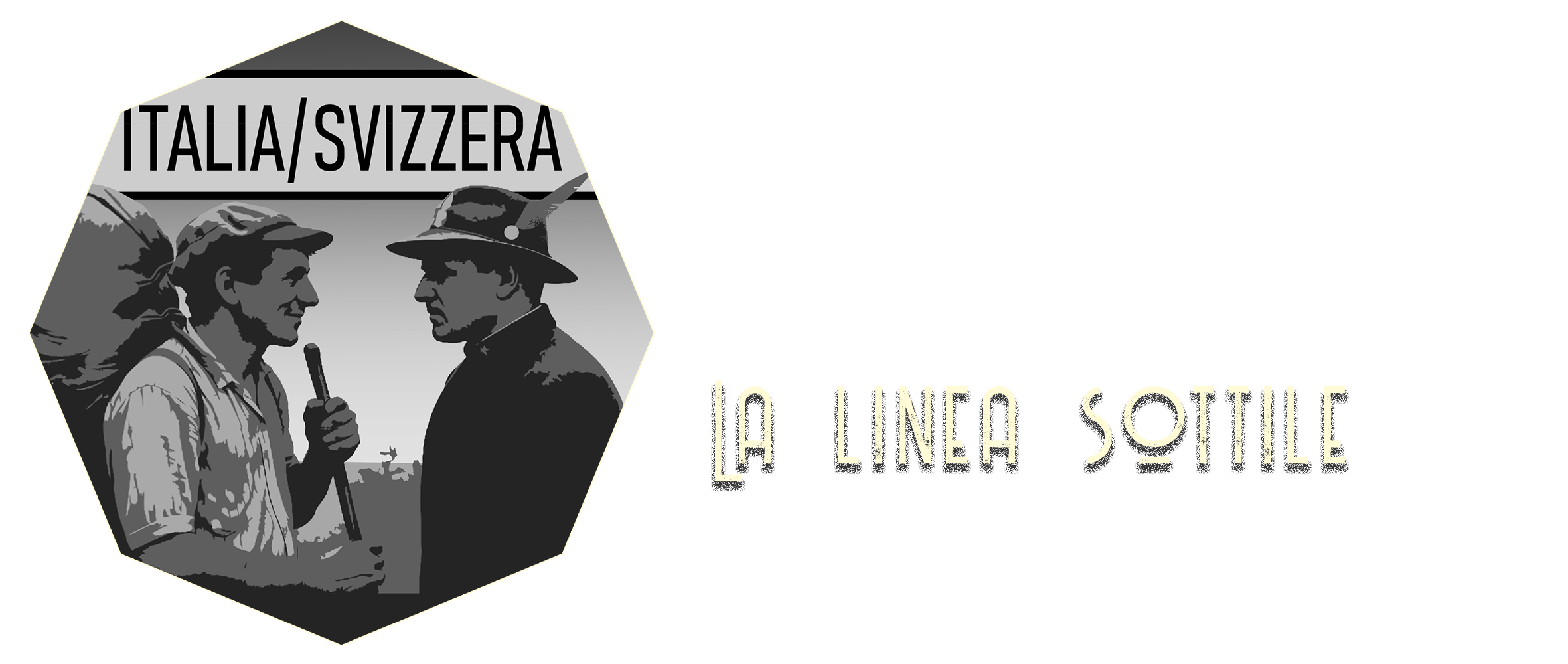
Per secoli, nelle Alte Terre il confine è stato una linea labile tra Italia e Svizzera, tra lecito e vietato.
Da queste parti il contrabbando non era una scelta criminale, ma una ragione di sopravvivenza o addirittura un atto di, ribellione silenziosa nata per necessità tra comunità che non riconoscevano in quel confine una divisione naturale.
Già molto più a valle, la Torre di Olonio, antico presidio che vigilava sulle paludi del Piano di Spagna, ricordava ai viandanti quanto il controllo delle rotte commerciali fosse da sempre una questione di potere.
Tra il tramonto dell’ ottocento e la metà del novecento, le montagne si trasformarono in vene pulsanti di scambi proibiti. Se l’alba del fenomeno vide il passaggio di sale e tabacco, fu il secondo dopoguerra a scatenare la vera “epopea del caffè”.
In Svizzera lo chiamavano con un sorriso beffardo “esportazione due”, ma per chi stava sul versante italiano era l’unico modo per sbarcare il lunario.
I signori di questi sentieri erano gli spalloni. Uomini e donne che sfidavano le leggi e l’abisso portando sulle spalle la bricolla, un sacco di tela grezza che poteva pesare dai 20 fino ai 40 chili di caffè o sigarette. Le donne furono il cuore pulsante di questa rete: durante la seconda guerra mondiale, con gli uomini al fronte, furono loro a scalare i passi oltre i 2000 metri, cariche di riso da scambiare con il sale necessario per conservare le carni. In quegli anni duri, il flusso si invertì: l’Italia nutriva la Svizzera con il riso della pianura in cambio di pochi franchi o generi di prima necessità.
Accanto alla polvere dei sentieri crebbe la leggenda. Si narra di un crescente rispetto, quasi cavalleresco, che intorno agl anni ‘70 del secolo scorso talvolta univa gli “sgarbasach” (i finanzieri) e i contrabbandieri, entrambi figli della stessa montagna e della stessa durezza del vivere.
Ma il romanticismo della memoria non deve cancellare il sangue.
Lungo quello che oggi è il Sentiero della memoria, i nomi di chi non è tornato restano incisi nel vento. Questo tracciato ad anello di circa 8,5 chilometri parte dalla frazione tiranese di Baruffini. Il sentiero si inerpica toccando l’antico nucleo del Piazzo, dove nel 1964 fu uccisa a soli venticinque anni Irma Rinaldi, unica donna vittima documentata del dopoguerra.
Da qui, il cammino prosegue verso l’ex Caserma della Guardia di Finanza al Sasso del Gallo, sentinella sul confine italo-svizzero, teatro nel 1966 del sacrificio del finanziere Dario Cinus, precipitato nel vuoto nel disperato tentativo di salvare un contrabbandiere.
L’itinerario continua poi attraverso il maggengo Papi, la località Puzzat de Murat (antica postazione della Regia Guardia di Finanza) e i Cancelletti, punto di scambio dei visti tra le pattuglie, per poi ridiscendere verso la Zocca e chiudere il cerchio nuovamente a Baruffini.
Oggi, i cambiamenti dell’economia globale e l’apertura delle frontiere hanno consegnato quella lotta quotidiana agli archivi, ma lo spirito di chi ha percorso quelle mulattiere vive ancora.
Percorrere oggi il Sentiero della memoria significa riscoprire un’ identità fatta di resistenza e umanità, dove ogni pietra racconta una bricolla posata a terra, un pericolo scampato, una fuga, una resa e l’attesa di una nuova notte senza luna.
Luca Poletti
SMUGGLING
THE THIN LINE
For centuries, in the High Lands, the border has been a blurred line between Italy and Switzerland, between what was lawful and what was forbidden. In these parts, smuggling was not a criminal choice, but a means of survival—or even an act of quiet rebellion born of necessity among communities that did not recognise that border as a natural division.
Further down the valley, the Torre di Olonio, an ancient outpost overlooking the marshlands of the Piano di Spagna, reminded travellers that the control of trade routes has always been a matter of power.
Between the late nineteenth century and the mid-twentieth century, the mountains became pulsating veins of illicit exchange. While the early days of the phenomenon saw the passage of salt and tobacco, it was the post-war period that ignited the true “coffee epic”. In Switzerland, it was mockingly referred to as “export number two”, but for those on the Italian side it was the only way to make ends meet.
The masters of these paths were the spalloni: men and women who defied both the law and the abyss, carrying on their backs the bricolla, a coarse canvas sack weighing between 20 and 40 kilograms of coffee or cigarettes. Women were the beating heart of this network: during the Second World War, with men at the front, it was they who climbed passes above 2,000 metres, laden with rice to be exchanged for the salt needed to preserve meat. In those harsh years, the flow reversed—Italy fed Switzerland with rice from the plains in exchange for a few francs or basic necessities.
Alongside the dust of the trails, legend took root. Stories tell of a growing, almost chivalrous respect that, around the 1970s, at times united the sgarbasach (customs officers/financial police) and the smugglers—both sons of the same mountains, shaped by the same harshness of life. Yet the romance of memory must not erase the blood.
Along what is now known as the Sentiero della Memoria (Path of Memory), the names of those who never returned remain etched in the wind. This circular route of approximately 8.5 kilometres begins in the hamlet of Baruffini, near Tirano. The path climbs steeply, passing through the ancient settlement of Piazzo, where in 1964 Irma Rinaldi was killed at just twenty-five years of age—the only documented female victim of the post-war period.
From here, the trail continues towards the former Guardia di Finanza barracks at Sasso del Gallo, a sentinel on the Italian-Swiss border and the site, in 1966, of the sacrifice of officer Dario Cinus, who fell into the void in a desperate attempt to save a smuggler.
The route then winds on through the maggengo of Papi, the locality of Puzzat de Murat (an ancient Royal Finance Guard post), and Cancelletti—a checkpoint where patrols exchanged permits—before descending towards Zocca and closing the loop back in Baruffini.
Today, changes in the global economy and the opening of borders have consigned that daily struggle to the archives, yet the spirit of those who once walked these mule tracks still endures. To follow the Sentiero della Memoria today is to rediscover an identity shaped by resilience and humanity, where every stone tells of a bricolla set down, a danger escaped, a flight, a surrender, and the انتظار of another moonless night.