
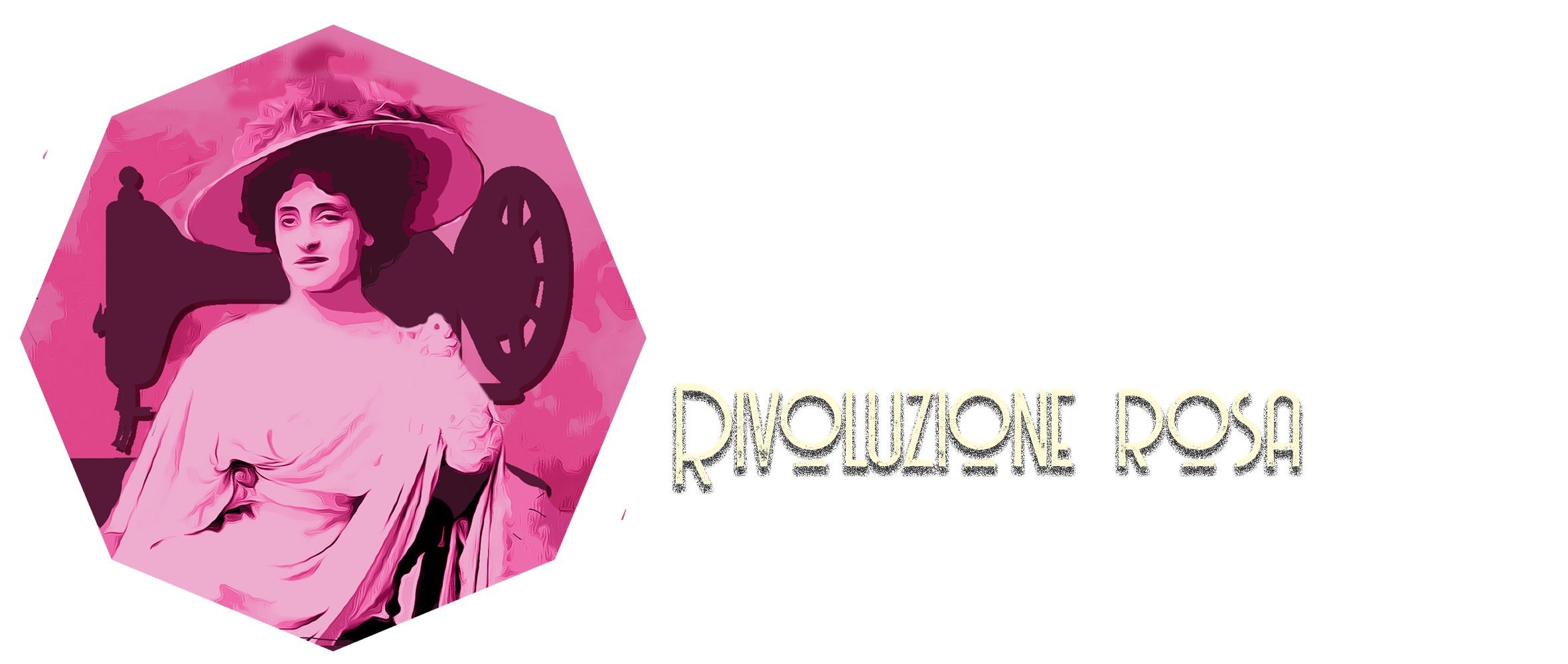
Devo veramente spiegare perché questa tessera é rosa?
Ma perché è Rosa!
La storia di Rosa Genoni inizia il 16 giugno 1867 a Tirano, nel cuore della Valtellina. Primogenita di ben diciotto fratelli (di cui solo dodici sopravvissero all’infanzia), Rosa crebbe in una famiglia di umili origini, forgiando fin da piccola quel carattere tenace che l’avrebbe resa una pioniera. A soli dieci anni, dopo aver frequentato appena la terza elementare, si trasferì a Milano per lavorare come “piscinina” nella sartoria della zia.
Ma Rosa voleva di più: di giorno cuciva e di sera studiava, riuscendo a ottenere la licenza elementare alla scuola serale e a padroneggiare il francese, una lingua che le avrebbe aperto le porte del mondo.
Il suo talento e la conoscenza delle lingue non passarono inosservati: nel 1884, a soli diciassette anni, fu inviata a Parigi dai dirigenti del Partito Operaio Italiano come delegata a un convegno internazionale sulle condizioni dei lavoratori. Questa esperienza, unita agli anni trascorsi a perfezionarsi negli atelier di Nizza e Parigi, la trasformò in una professionista d’eccezione. Tornata in Italia, nel 1895 fu assunta dalla prestigiosa casa di moda H. Haardt et Fils, dove scalò rapidamente le gerarchie fino a diventare direttrice, guidando un organico di circa duecento persone.
Mentre la sua carriera decollava, Rosa intrecciava la moda con un profondo impegno civile e politico.
Abbracciò il socialismo e divenne amica di Anna Kuliscioff, lottando al suo fianco per l’emancipazione delle lavoratrici e la tutela dei minori. Per lei, l’abito non era un oggetto frivolo, ma uno strumento di liberazione del corpo e della mente femminile dai dogmi dell’epoca. In questo periodo iniziò anche la sua lunga storia d’amore con l’avvocato Alfredo Podreider, da cui nel 1903 ebbe la figlia Fanny, pur potendolo sposare solo molti anni dopo a causa dell’opposizione della suocera.
Il momento della consacrazione definitiva arrivò all’Esposizione Internazionale di Milano del 1906.
Rosa presentò abiti straordinari, realizzati esclusivamente con tessuti italiani e ispirati ai capolavori del Rinascimento: celebri rimasero l’abito “Primavera”, ispirato a Botticelli, e il “Manto da corte” tratto dal Pisanello. Le sue creazioni le valsero il Grand Prix della giuria, rendendola la prima donna a ricevere tale onore e consacrandola come la vera ideatrice di quello che oggi chiamiamo “Made in Italy”. Il suo obiettivo era chiaro: liberare la moda italiana dal predominio francese valorizzando l’artigianato e l’arte nazionale.
Nel 1908, Rosa propose l’abito “Tanagra”, un modello ispirato all’antichità greca che, eliminando il rigido corsetto, offriva alla donna una nuova libertà di movimento e un ideale di bellezza moderna.
Parallelamente, dedicò oltre vent’anni all’insegnamento presso la Scuola della Società Umanitaria di Milano, dove formò generazioni di sarte unendo tecnica e consapevolezza sociale.
Allo scoppio della Grande Guerra, il suo impegno si tinse di pacifismo radicale.
Nel 1915 fu l’unica delegata italiana al Congresso Internazionale delle Donne all’Aia, dove, insieme a premi Nobel come Jane Addams, cercò invano di mediare tra i governi per fermare il conflitto.
Negli anni successivi continuò a scrivere e a promuovere progetti sociali, come il laboratorio di sartoria per le detenute di San Vittore finanziato dal marito nel 1928.
La sua coerenza fu messa alla prova dal fascismo: nel 1931, rifiutandosi di giurare fedeltà al regime, si dimise dall’insegnamento, rinunciando alla cattedra per non tradire i propri ideali. Si ritirò prima a Sanremo e poi a Varese, dedicandosi negli ultimi anni all’antroposofia di Rudolf Steiner e precorrendo i tempi con la sperimentazione dell’agricoltura biodinamica.
Anche in tarda età, la sua mente rimase rivolta al bene comune, come testimonia la lettera scritta all’ONU nel 1948 per invocare la pace in Palestina.
Rosa Genoni si spense a Varese il 12 agosto 1954, a 87 anni. Oggi riposa al Cimitero Monumentale di Milano, iscritta nel Famedio tra i cittadini illustri: una donna straordinaria che ha saputo trasformare la moda in un’arte civile e la propria vita in un inno alla libertà
Piccola curiosità.
La donna rappresentata in questo scudo, che compare spesso nelle pubblicazioni dedicate a Rosa Genoni, di fatto non è Rosa.
Si chiamava Lyda Borelli e ai tempi era una famosissima attrice di teatro e cinema muto, un’autentica diva.
L’associazione Rosa-Lyda è dovuta al fatto che l’attrice vestiva capi realizzati da Rosa, diventandone di fatto testimonial.
Anche questo aneddoto testimonia l’estro imprenditoriale di Rosa, che usava gli “influencer” decenni prima della nascita di internet.
Luca Poletti
ROSA GENONI
PINK REVOLUTION
Do I really need to explain why this shield is pink?
Because it is pink!
The story of Rosa Genoni begins on 16 June 1867 in Tirano, in the heart of Valtellina. The eldest of eighteen siblings (only twelve of whom survived childhood), Rosa grew up in a humble family, shaping from an early age the strong and determined character that would make her a pioneer. At just ten years old, after completing only three years of primary school, she moved to Milan to work as a piscinina (young apprentice seamstress ) in her aunt’s tailoring workshop.
But Rosa wanted more: by day she sewed, by night she studied, eventually obtaining her primary school certificate through evening classes and mastering French—a language that would open the doors to the wider world.
Her talent and linguistic skills did not go unnoticed: in 1884, at just seventeen, she was sent to Paris by the leaders of the Italian Workers’ Party as a delegate to an international conference on workers’ conditions. This experience, combined with her years of training in the ateliers of Nice and Paris, shaped her into an exceptional professional. Back in Italy, in 1895 she was hired by the prestigious fashion house H. Haardt et Fils, where she quickly rose through the ranks to become director, leading a staff of around two hundred people.
As her career flourished, Rosa intertwined fashion with deep civic and political commitment.
She embraced socialism and became a friend of Anna Kuliscioff, fighting alongside her for women workers’ emancipation and the protection of minors. For her, clothing was not a frivolous object but a tool for liberating the female body and mind from the rigid conventions of the time. During this period, she also began her long love story with lawyer Alfredo Podreider, with whom she had her daughter Fanny in 1903, although she was only able to marry him many years later due to her mother-in-law’s opposition.
Her moment of definitive recognition came at the 1906 Milan International Exhibition.
Rosa presented extraordinary garments made exclusively from Italian fabrics and inspired by Renaissance masterpieces. Particularly memorable were the “Primavera” dress, inspired by Botticelli, and the “Court Mantle” inspired by Pisanello. Her creations earned her the Grand Prix of the jury, making her the first woman ever to receive this honour and establishing her as the true pioneer of what we now call “Made in Italy.” Her aim was clear: to free Italian fashion from French dominance by enhancing national craftsmanship and artistic heritage.
In 1908, Rosa introduced the “Tanagra” dress, inspired by ancient Greece. By eliminating the rigid corset, it offered women new freedom of movement and a modern ideal of beauty.
At the same time, she devoted over twenty years to teaching at the Società Umanitaria School in Milan, where she trained generations of seamstresses, combining technical skill with social awareness.
With the outbreak of the First World War, her commitment took on a radical pacifist tone.
In 1915 she was the only Italian delegate at the International Congress of Women in The Hague, where, alongside Nobel Prize laureates such as Jane Addams, she unsuccessfully attempted to mediate between governments to halt the conflict.
In the following years she continued writing and promoting social projects, including a tailoring workshop for the women prisoners of San Vittore, funded by her husband in 1928.
Her consistency was tested by Fascism: in 1931, refusing to swear loyalty to the regime, she resigned from teaching, giving up her professorship rather than betray her ideals. She first moved to Sanremo and later to Varese, devoting her final years to the anthroposophy of Rudolf Steiner and anticipating her time through experiments in biodynamic agriculture.
Even in old age, her mind remained focused on the common good, as shown by the letter she wrote to the United Nations in 1948 calling for peace in Palestine.
Rosa Genoni died in Varese on 12 August 1954, aged 87. She now rests in Milan’s Monumental Cemetery, included in the Famedio among Italy’s illustrious citizens: an extraordinary woman who transformed fashion into a civic art and her life into a hymn to freedom.
A small curiosity
The woman depicted on this shield—often featured in publications dedicated to Rosa Genoni—is in fact not Rosa herself.
Her name was Lyda Borelli, a highly celebrated theatre and silent film actress of her time, a true diva.
The association between Rosa and Lyda arose because the actress wore garments designed by Rosa, effectively becoming her public ambassador.
This anecdote also highlights Rosa’s entrepreneurial vision, as she used “influencers” decades before the invention of the internet.